Am I stressed, or is it an anxiety disorder? How to tell the difference
It is one of the most common questions people ask about their own feelings. The honest short answer: stress and anxiety overlap a lot, only a qualified professional can diagnose a disorder — but there are a few well-established signals that help you decide whether it is worth reaching out.
Almost everyone knows the feeling: a tight chest before a deadline, a racing mind at 2 a.m., a knot of worry that will not quite untie. Most of the time this is ordinary stress, and it passes. But sometimes it lingers, grows, and starts to get in the way — and people understandably wonder whether they have crossed a line into an anxiety disorder. The two feel remarkably similar, which is exactly why the question is so common. This piece lays out, in plain language and drawing only on highly reputable health authorities, what each one actually is, why they are so easily confused, and the signals professionals use to tell them apart.
01The honest starting point: you cannot self-diagnose
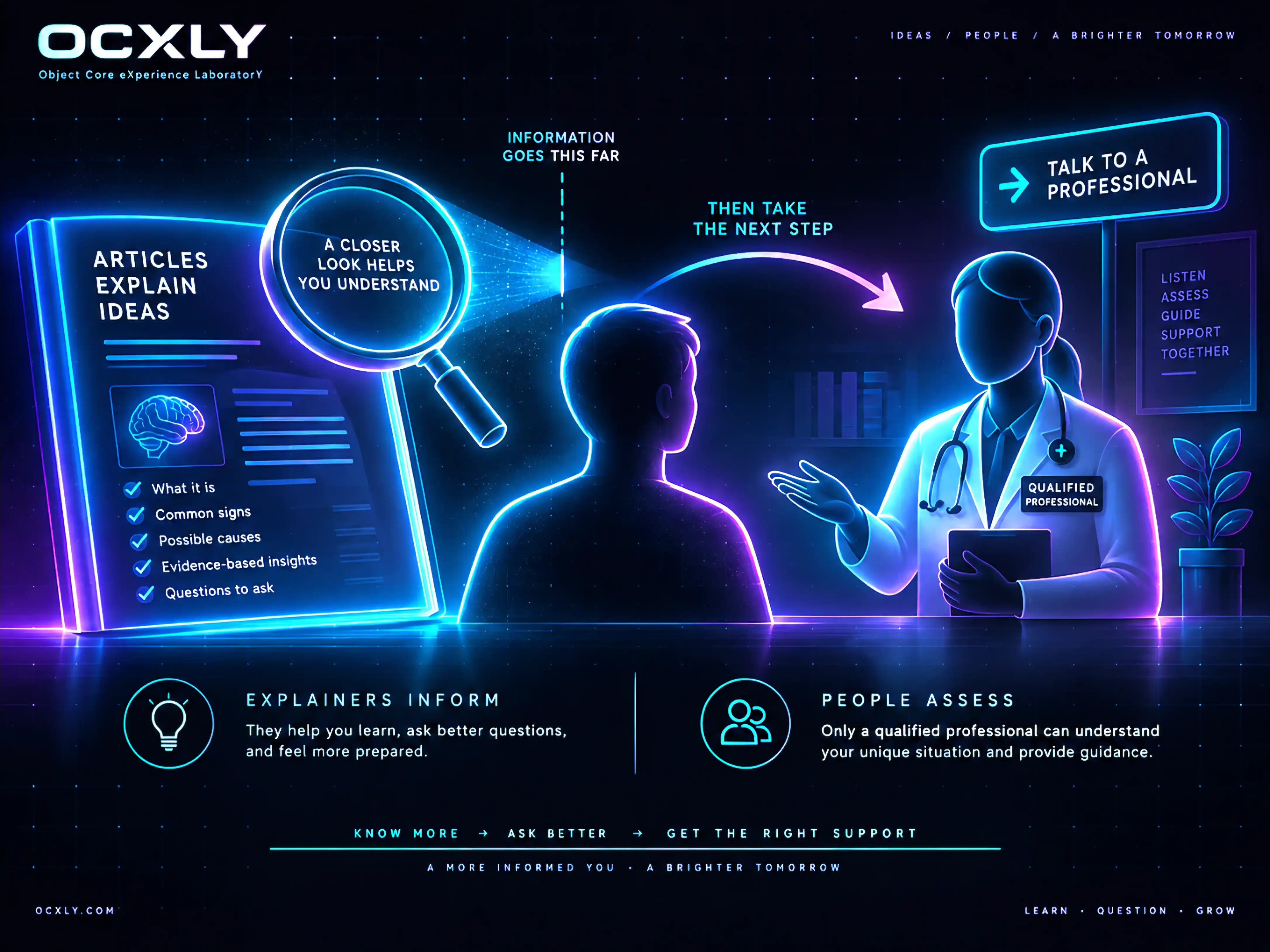
Before anything else: reading an article — this one included — cannot tell you whether you have a disorder. Diagnosis is a clinical judgement made by a trained professional who can take your full history, rule out physical causes, and weigh the whole picture. What an explainer can do is help you understand the difference between normal stress and something worth getting checked, and lower the hesitation many people feel about asking for help. Both national health services and mental-health bodies are consistent on the first step: if worry or fear is interfering with your life, talk to a doctor.26
02What "stress" actually is
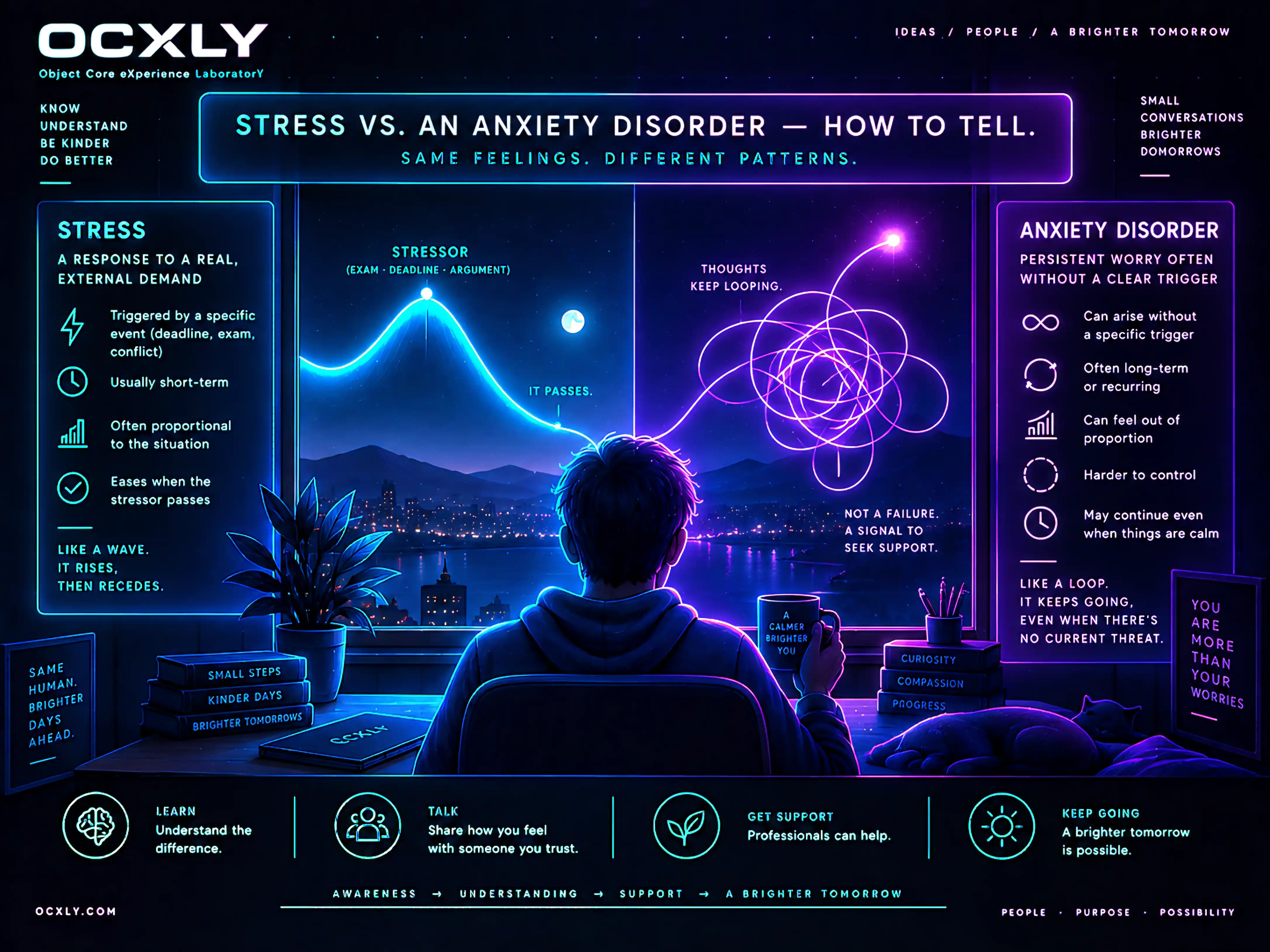
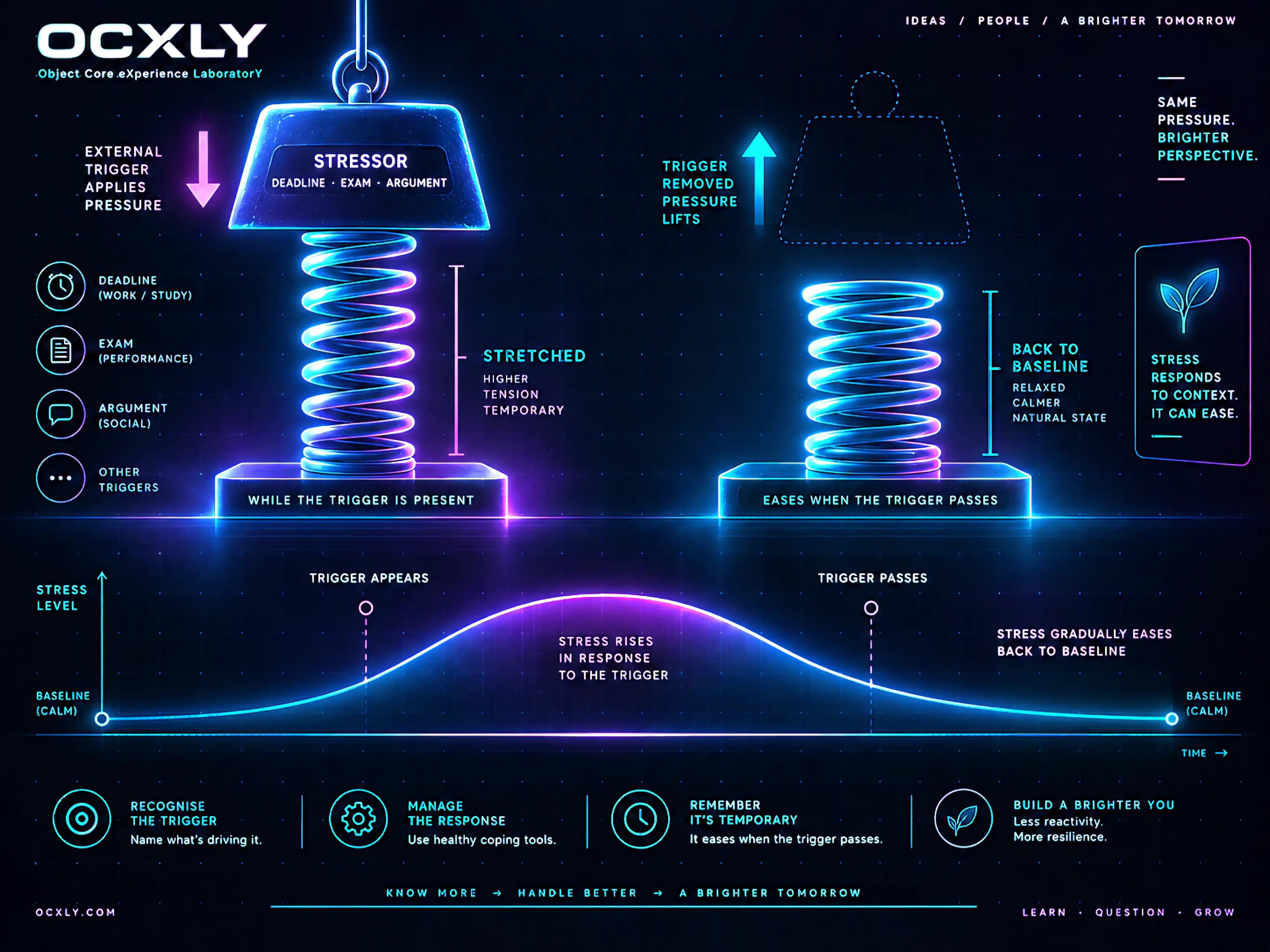
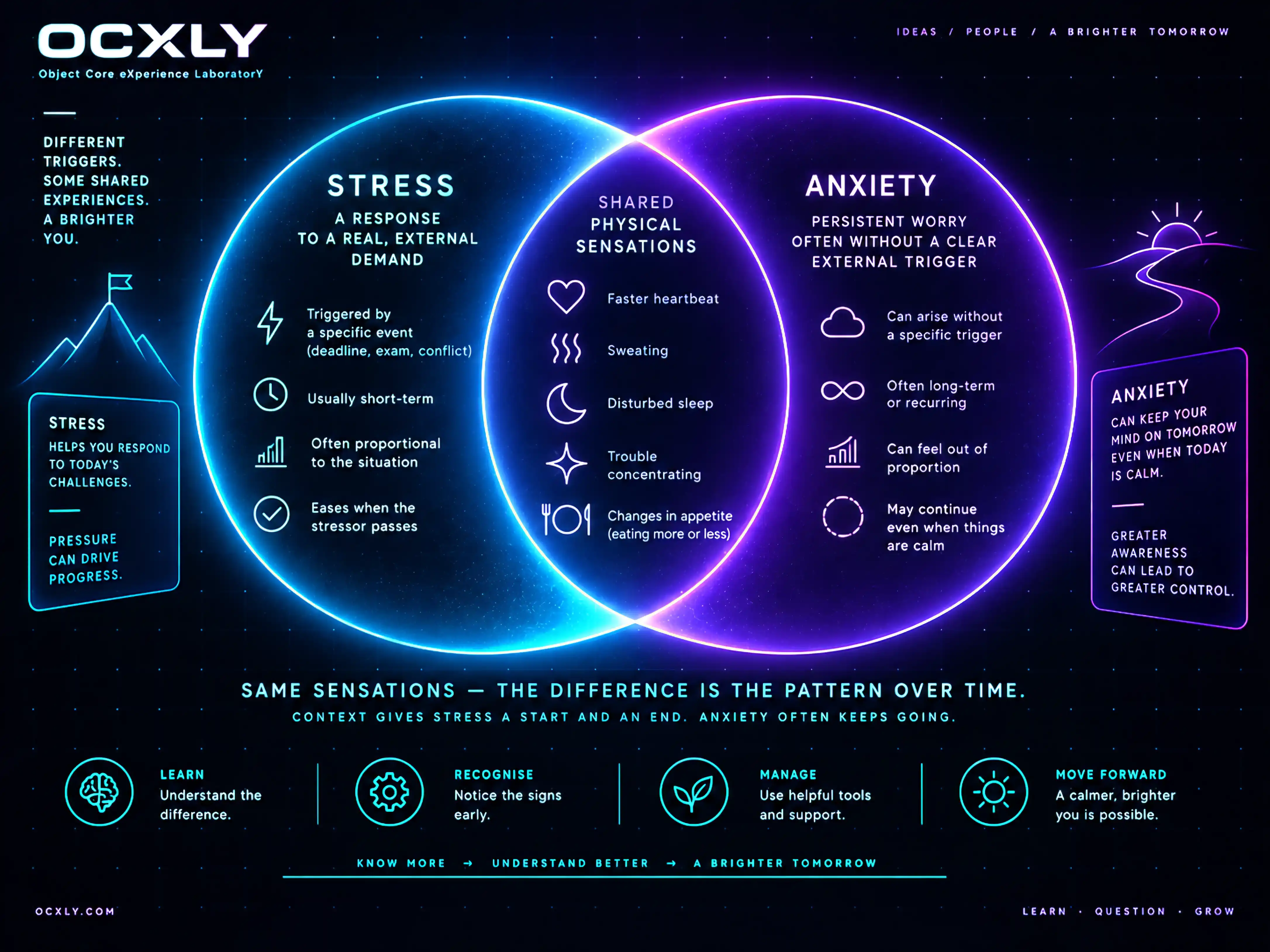
The American Psychological Association describes stress as a response to an external trigger — a "stressor" such as a work deadline, an argument, an exam, or a difficult life event. It can be short-term or long-term, and it typically eases once the situation that caused it is resolved or removed.1 Stress is not inherently a disorder; in fact, a manageable amount of it is a normal, adaptive part of life that can push you to prepare and perform. The defining feature is that stress is tied to something: when the stressor lifts, the feeling usually follows.1
03What anxiety — and an anxiety disorder — actually is
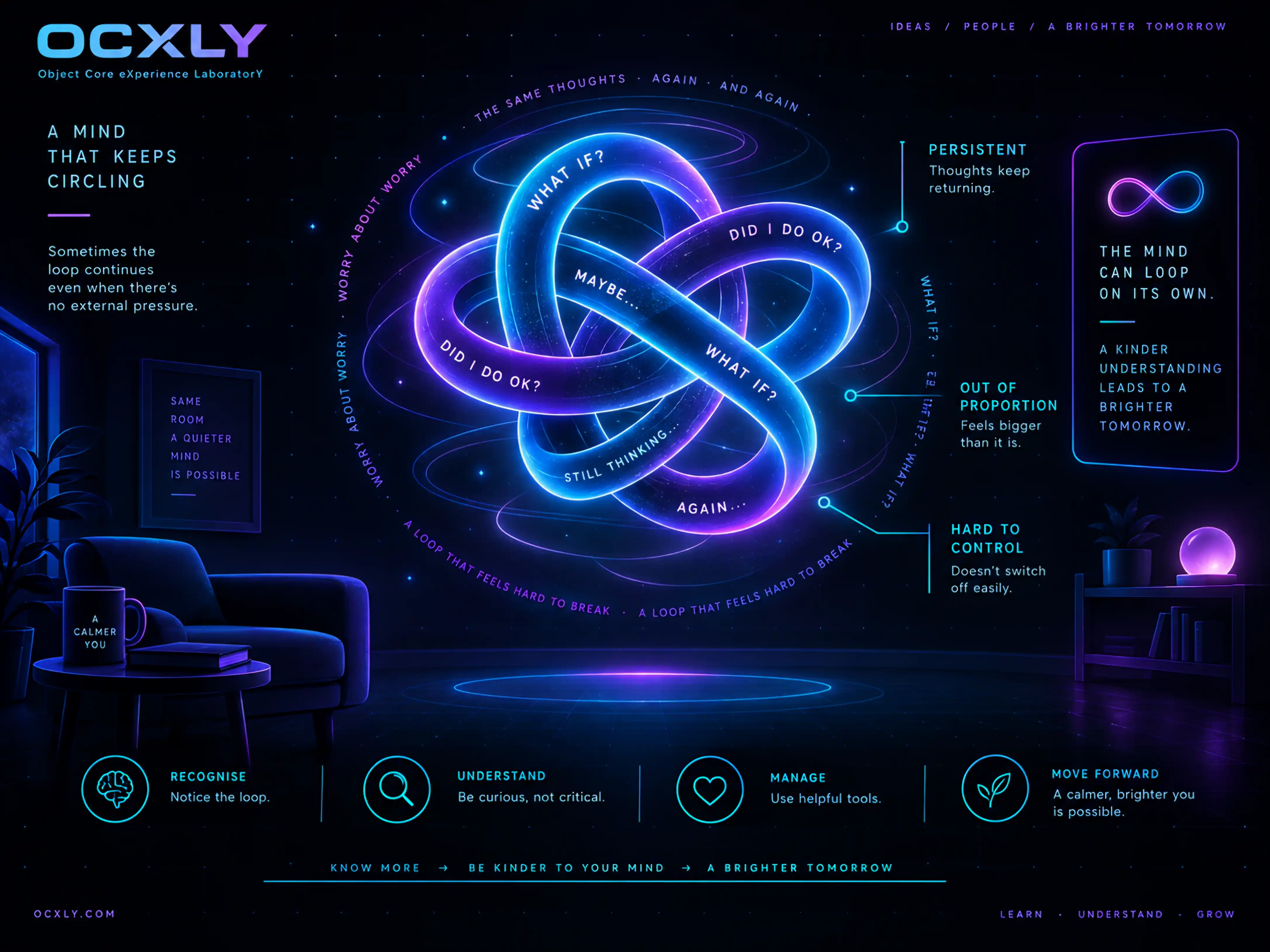
Anxiety, by contrast, is characterised by persistent, excessive worry that does not go away even in the absence of a stressor. The APA draws the line clearly: where stress is generally a reaction to an external cause, anxiety is worry that continues — worry about worry, or worry with no obvious trigger at all.1 Feeling anxious now and then is normal and human. It becomes a possible anxiety disorder when the anxiety is ongoing, feels out of proportion to the situation, is hard to control, and interferes with everyday functioning.
Anxiety disorders are not one single thing — they are a group of related conditions that includes generalized anxiety disorder (GAD), panic disorder, social anxiety disorder, and specific phobias.2 The one most relevant to the "is this just stress?" question is generalized anxiety disorder, which the NHS describes as a long-term condition of feeling anxious about a wide range of situations and issues rather than one specific event, on most days, often struggling to remember the last time you felt truly relaxed.6
A useful rule of thumb from the experts: stress usually has a cause and eases when that cause passes; an anxiety disorder tends to persist, feels out of proportion, is hard to switch off, and gets in the way of daily life.1
04Why they feel the same
Part of what makes this so confusing is that stress and anxiety share much of the same physiology. The APA notes that in both, you might feel your heart racing, feel sweaty, have trouble concentrating, notice changes in appetite, and struggle to fall or stay asleep.1 The physical symptoms of generalized anxiety overlap heavily too — restlessness, fatigue, muscle tension, irritability, and disturbed sleep are common to both a stressed week and a diagnosable disorder.3 In other words, you often cannot tell them apart by how your body feels in a single moment. The difference lives in the pattern over time, not the sensation itself.
05The signals professionals look for
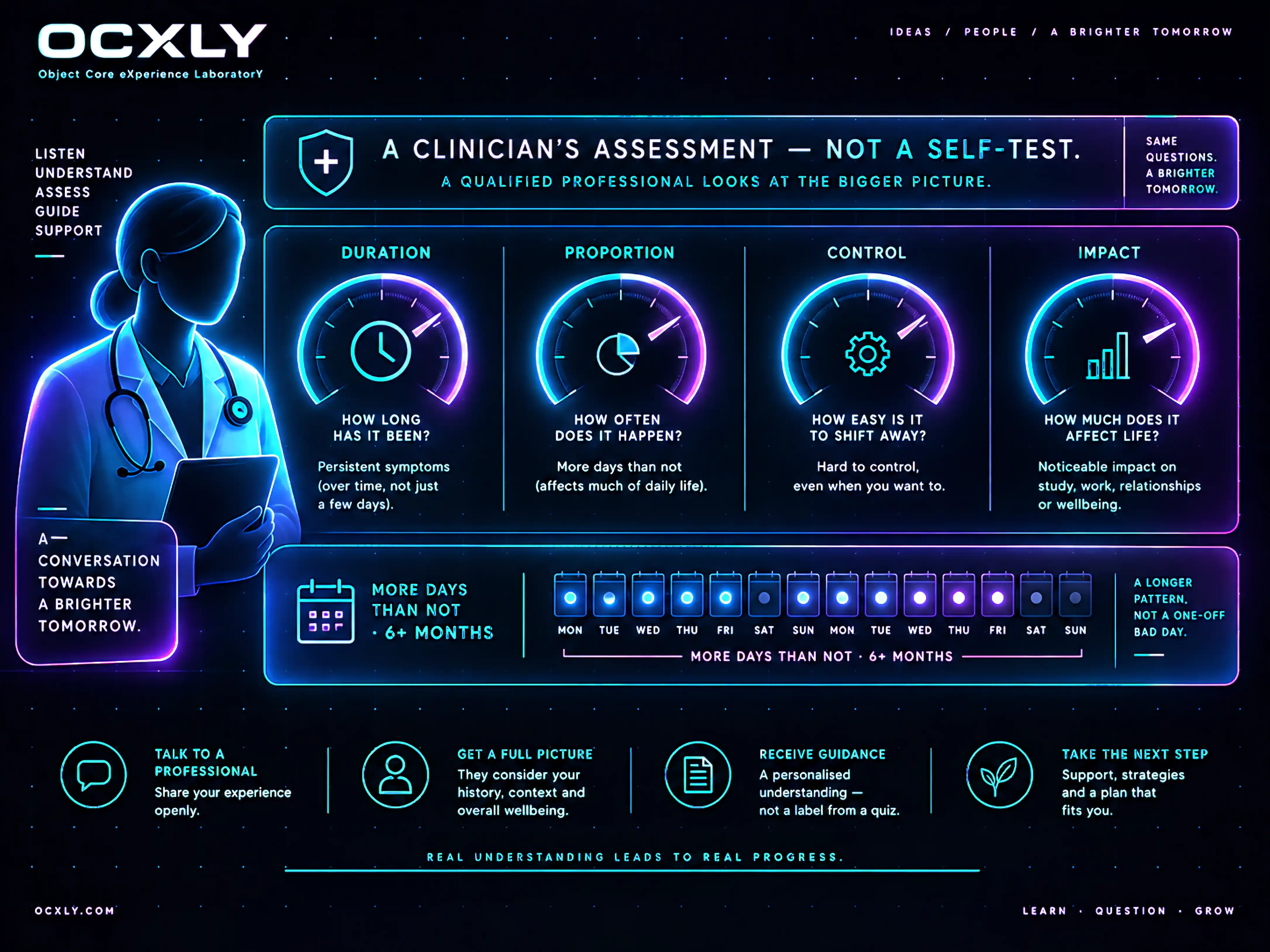
Clinicians do not guess; they assess against defined criteria. For generalized anxiety disorder, the widely used diagnostic standard (the American Psychiatric Association's DSM-5-TR) describes a recognisable pattern: excessive anxiety and worry occurring more days than not for at least six months, about a number of different things; worry that is difficult to control; and the presence of several associated symptoms — such as restlessness or feeling on edge, being easily fatigued, difficulty concentrating, irritability, muscle tension, and sleep disturbance — that together cause significant distress or impairment in daily life, and are not better explained by a medication, substance, or another medical condition.4
Translated into plainer language, the recurring themes that separate a disorder from ordinary stress are:
- Duration. It has gone on for a long stretch — months, not a rough week — and keeps coming back.4
- Proportion. The worry feels bigger than the situation warrants, or attaches to many things at once.1
- Control. It is genuinely hard to switch off or reason your way out of, even when you try.4
- Impact. It is interfering with your sleep, work, relationships, or day-to-day life.6
06You are far from alone — and it is treatable
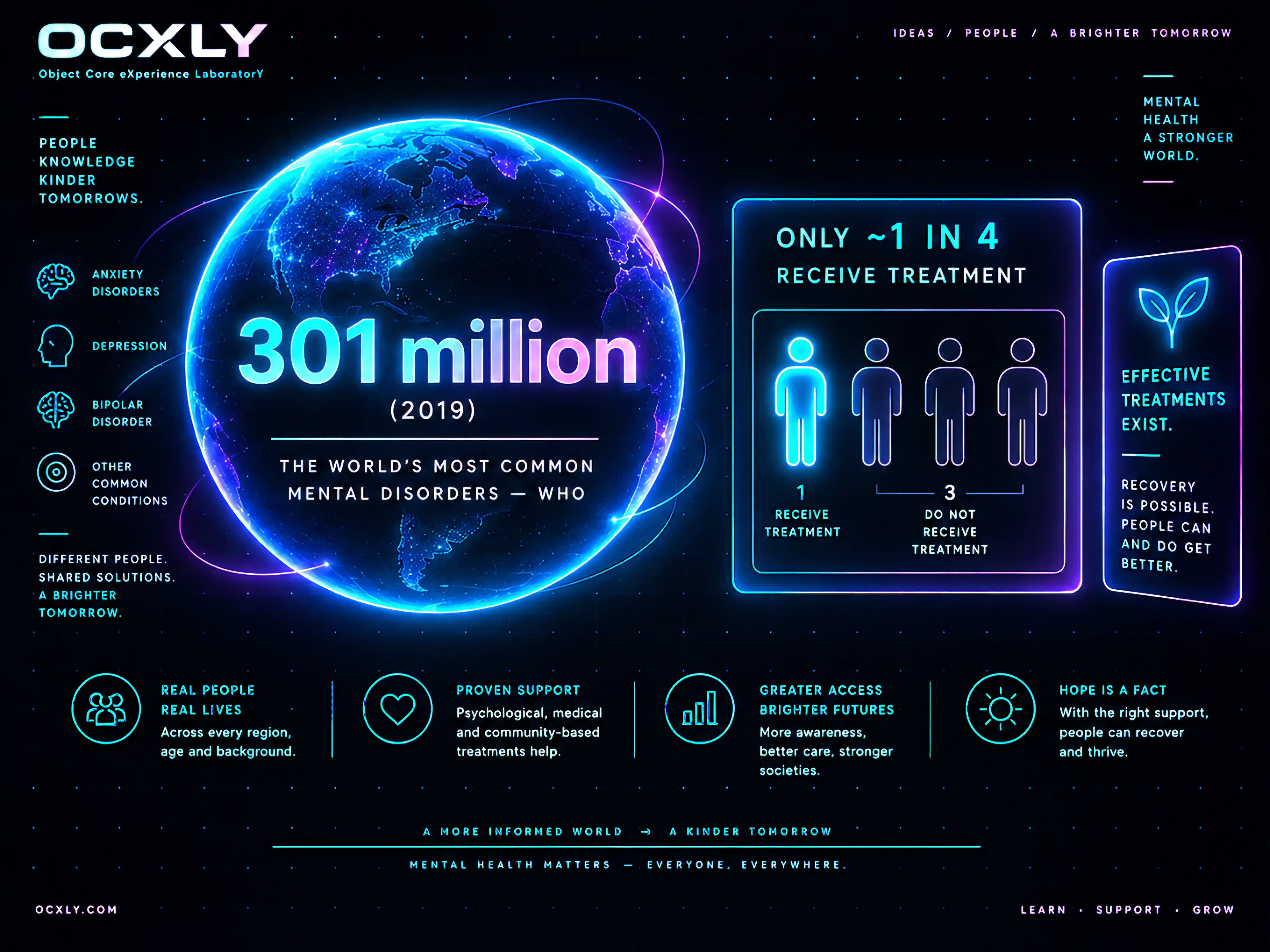
If any of this resonates, it helps to know how common it is. According to the World Health Organization, anxiety disorders are the world's most common mental disorders, affecting an estimated 301 million people in 2019 — around 4% of the global population — and they affect more women than men.5 Just as important: highly effective treatments exist, yet the WHO estimates only about one in four people with an anxiety disorder receive treatment, often because of stigma or lack of access.5 Seeking help is not an overreaction; for most people it is the single most useful thing they can do.
07When — and how — to reach out
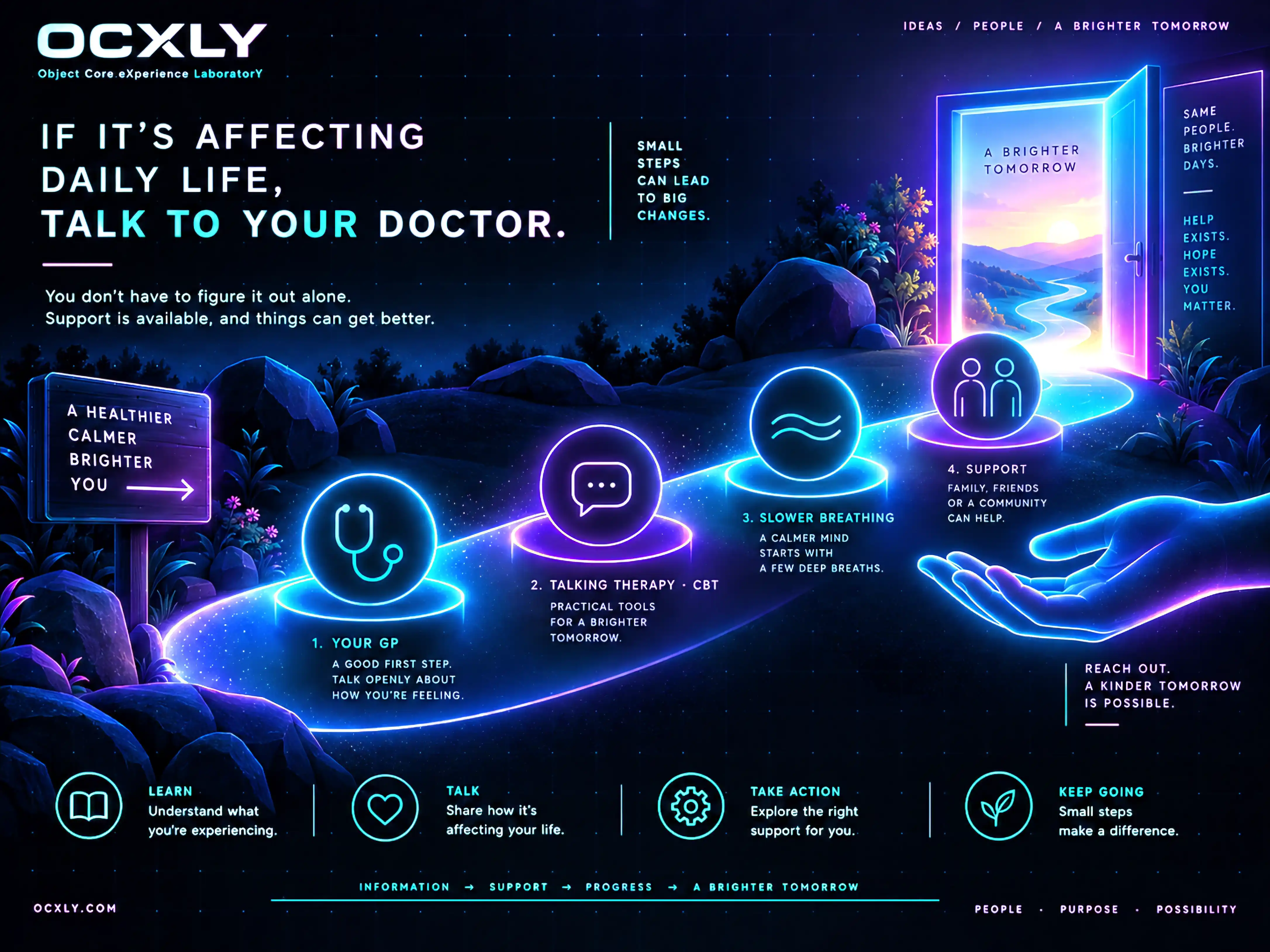
The guidance from health authorities is refreshingly consistent. The NHS advises seeing a GP if anxiety is affecting your daily life or causing you distress; a doctor will usually suggest talking therapies such as cognitive behavioural therapy (CBT) before medication, and in many systems you can refer yourself to a psychological-therapies service.6 The US National Institute of Mental Health frames the first step the same way — talk to your doctor, who can examine you, rule out an unrelated physical problem, and refer you to a mental-health specialist if needed; anxiety disorders are generally treated with psychotherapy, medication, or both.2 The Mayo Clinic adds a practical trigger for booking that appointment: if you worry so much it interferes with work, relationships, or other parts of your life; if you feel your worry is hard to control; or if you notice depression or use alcohol or drugs to cope.3
For everyday, lower-level stress, the same bodies point to well-evidenced self-care that genuinely helps — regular physical activity, protecting your sleep, relaxation and breathing techniques, staying connected to people you trust, and reputable self-help resources.6 If you want a simple way to practise slow breathing, our free breathing timer can guide the pace. These are worth doing regardless. But they are a complement to professional help when something more is going on, not a replacement for it.
08Where OCXLY lands
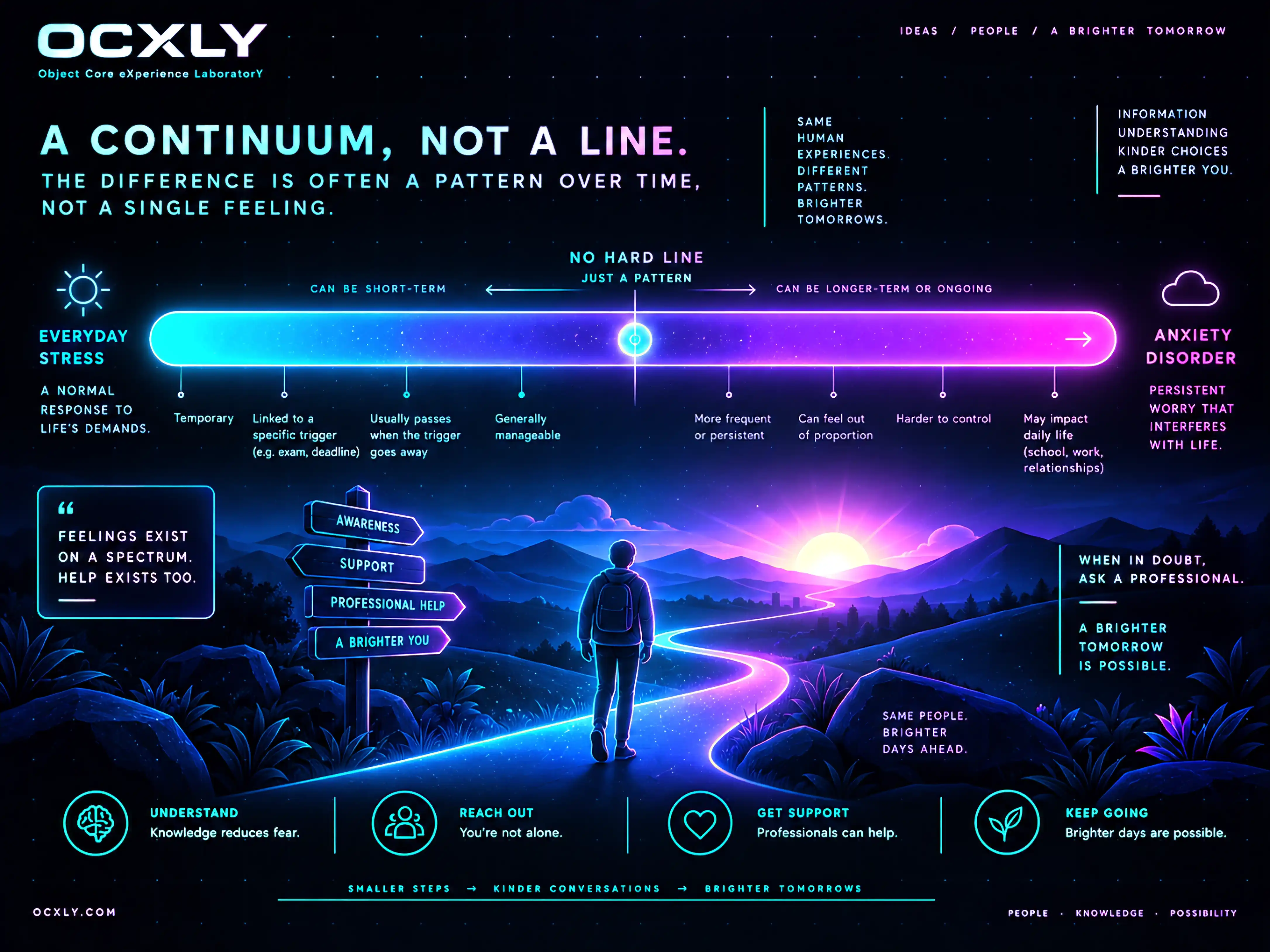
The question "am I stressed, or is it something more?" deserves a compassionate, non-alarmist answer. The truthful one is that stress and anxiety live on a continuum, the symptoms overlap, and no article can draw the line for your particular situation — only a qualified professional can. What you can take away is a clearer sense of the pattern that matters: stress is usually tied to a trigger and eases; a disorder tends to persist, feel disproportionate, resist control, and disrupt daily life.
Our view is simple: if you have been wondering long enough to search for the answer, that wondering is itself worth taking seriously — not as a cause for alarm, but as a nudge to talk to someone qualified. Anxiety disorders are common, they are treatable, and reaching out is a strength, not a weakness. When in doubt, ask a professional. And if you are wondering how everyday digital habits play into how you feel, see our companion explainer on social media and self-esteem.